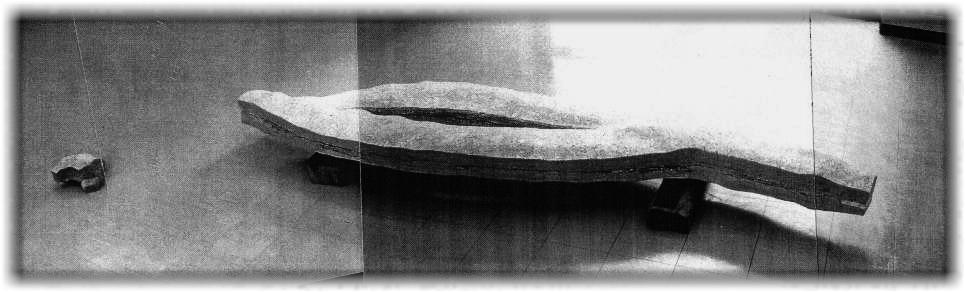
ongata90 003 ,92 006
material paper etc
**Around 1980**
In the midst of
an economic boom, the signs of the bubble were beginning to surface everywhere
in the city. People and things alike seemed slightly unsteady, as if lifted off
the ground. In that atmosphere, something finally began to move for me as well.
I was given the opportunity I had long hoped for—to formally study art.
At the time, the
art world was led by America, and Japan’s avant-garde “Mono-ha” had secured its
place. Meanwhile, art journalism seemed to be restlessly sniffing out the next
“ism.” I found that rapid shifting of currents strangely compelling. It felt as
if I was standing right at the threshold where something was ending and
something new was about to begin.
Encountering
conceptual art and minimal art made me question the very act of “painting,”
which I had previously taken for granted. At the same time, being swept up in
the tide of desire that defined the era, I began to feel a
certain emptiness in continuing to paint in the Western style. Before I
knew it, I had lost the ability to paint ordinary oil paintings.
Watching me like
that, Katsuhiko Narita remarked, “You can do too many things.” He was probably
right. But at the time, I had no room to accept it. My head was crowded with
thoughts running wild, yet my hands remained still. I was trapped in a maze
with no visible exit.
Still, when
someone said to me, “You have to make work,” it struck me with unexpected
clarity. Rather than thinking endlessly, I had to begin by doing. That
realization, simple as it was, pushed me forward.
The process I had
relied on—choosing a motif, developing ideas, making studies, and arriving at a
tableau—had already collapsed. If it no longer worked, there was no point
clinging to it. I decided to try something else. I picked up some paper at
hand, let lines run freely through automatism, and began layering photographs,
advertisements, magazine clippings, and scraps of fabric. I started over with
collage, guided by unexpected juxtapositions, a sense of familiarity, and the
balance of forms.
Stripping
objects of their original function and placing them into new contexts—this was
something I had absorbed almost greedily from Surrealism and Dada when I had
been struggling to find a way forward. Once I began to use it, I realized it
was no longer just knowledge, but a working method.
I also remember
the shock of encountering Pollock’s work. The idea of cutting out layers formed
through dripping and reconstructing them into organic forms seemed to leap
effortlessly beyond the framework of painting. Duchamp’s *Standard Stoppages*
likewise left a strong impression on me—the way it shifted attention from the
visual to time itself felt unexpectedly convincing. It was less an intellectual
understanding than something I grasped physically: “So this is also possible.”
So I tried it
myself. I worked on paper with a 1:2 proportion, applied drawings, and then cut
them apart into figure and ground. Onto their surfaces, I layered
fragments—advertisements and magazine images that had once stirred desire
during the bubble era, residues of images consumed and discarded by the city.
As I stripped
these materials of their original roles and carefully assembled them with glue,
something began to emerge: thin, plate-like objects without names. It wasn’t so
much an idea as something that revealed itself through the act of making.
By shifting
contexts and allowing time to enter into the work, I eventually arrived—after
much trial and difficulty—at what I called the “Morphological Time-Axis
Template.” The moment I saw it before me, I felt, for the first time, that what
had been circling in my head had finally taken form
outside of it. That sense of arrival remains vivid even now.